The James Hotel Firenze 1564

Renaissance heritage

The James Suite Hotel was not born from erasing the past, but from regenerating it. Once a family residence and later converted into a hotel, the building held an identity suspended between memory and function — an inheritance searching for continuity.

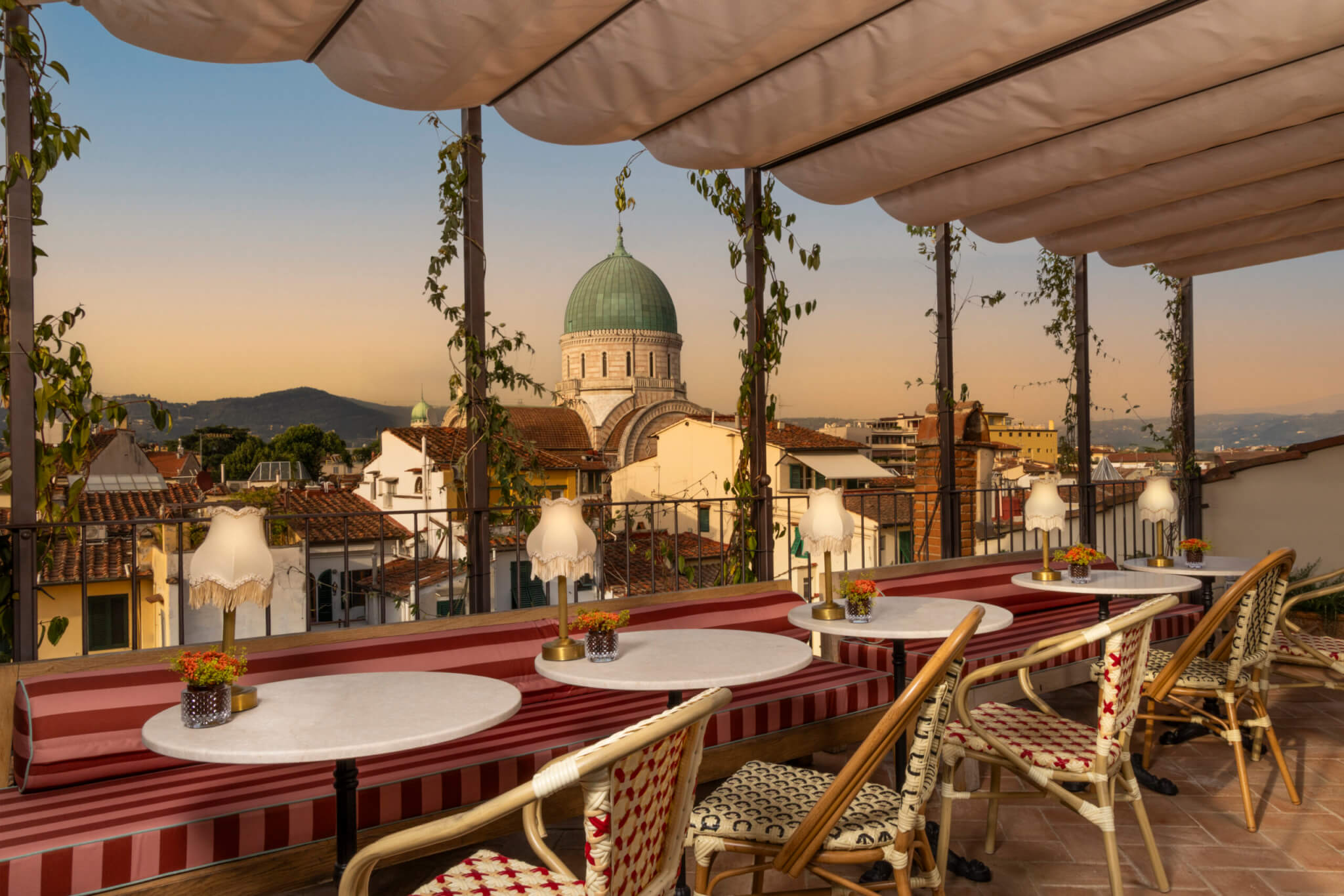
Opened in 2024, The James Hotel Firenze 1564 is a luxury boutique hotel in Florence, housed within a 16th-century palazzo in the historic centre. Designed by Prima Design, the project reinterprets Renaissance heritage through a contemporary architectural language, balancing preservation and transformation.

The challenge was not to “renew,” but to create something capable of lasting and evolving over time.

Gesture and Vision: Designing Between Impulse and Permanence

For PrimaDesign, the act of designing emerges from the encounter of two complementary forces:

  • the immediate intuition and spark of creativity;
  • the ability to imagine how a place will mature over the next twenty, fifty, or even one hundred years.
This approach resonates with Aldo Rossi’s belief that memory is the true material of architecture, and with Louis Kahn’s idea of building as a thoughtful, enduring act.

The James Suite Hotel was conceived precisely in that interstitial space where instinct meets permanence — an approach that defines Prima Design’s work in hospitality interior architecture.

Time as a Design Material

We see the present as fluid, almost volatile; what truly matters is what remains once today has passed.

For this reason, we treat space using Bachelard’s poetics — a geography of the soul where time settles and transforms.

The James Suite Hotel was imagined as a vessel for future memory: spaces that deepen with age, maturing rather than wearing away.

In this sense, luxury hotel interior design becomes an act of anticipation rather than immediacy.

Working on a Listed Building: Freedom Within Limitation

In Florence’s historic centre, the past is never distant — it is a constant presence.

Designing within a listed historic palazzo means accepting that constraints are not obstacles; they are guides. The restoration followed a logic of creative negotiation. What could not be altered became structure, rhythm, and narrative.

For Prima Design, freedom is not the absence of limits, but the ability to transform those limits into form. The historic building became a resonating chamber — not a container that restricts, but a body that amplifies. The project does not attempt to compete with history: it embraces it, interprets it, and distils it into the present.

Rooms as Narratives: Different Identities, One Cohesive Style

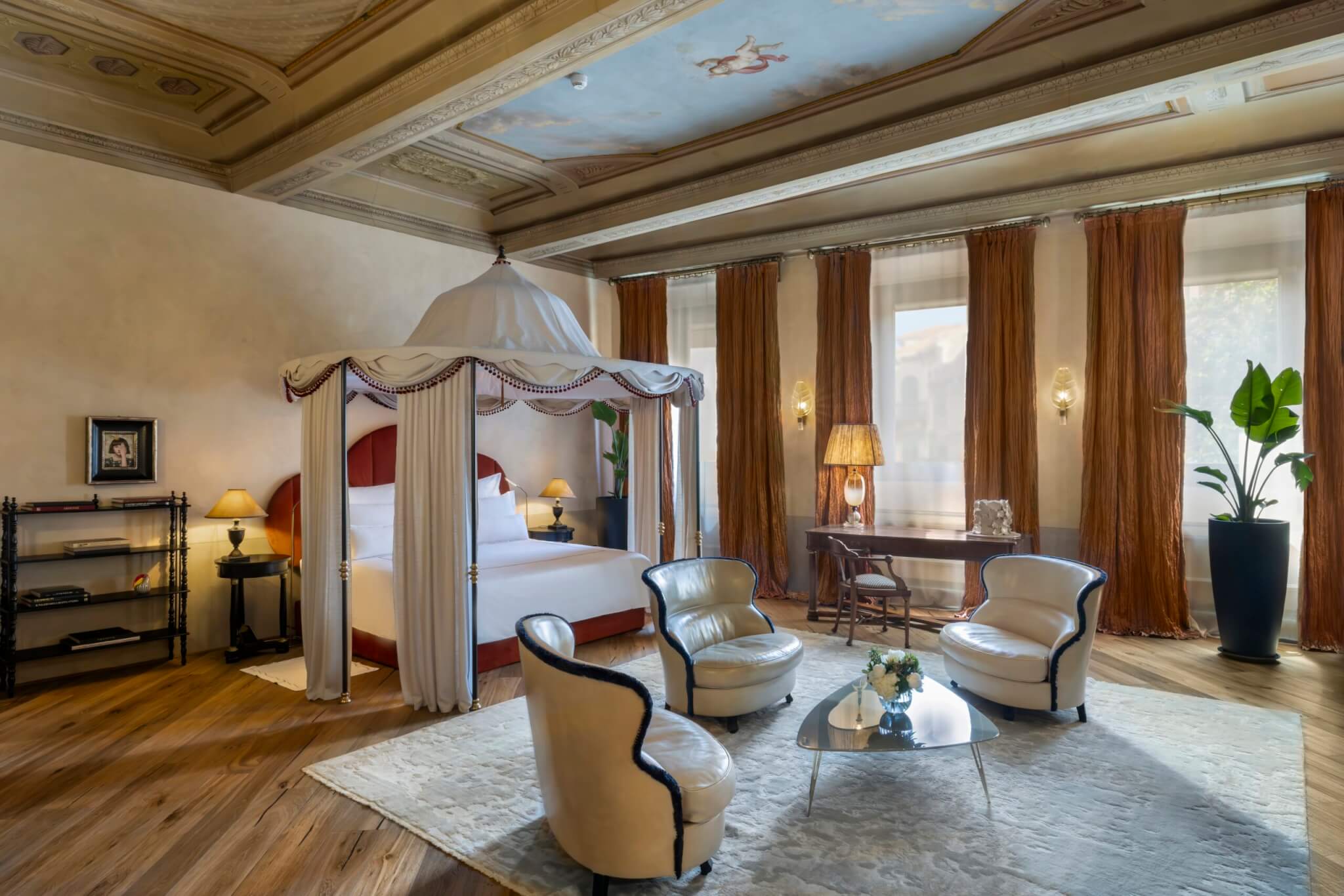
One of the project’s most distinctive elements is the way the rooms were conceived: not variations of a single theme, but autonomous micro-narratives. Each room has its own character — its palette, its light, its composition, its rhythm — yet all speak the same architectural language. Together, the 14 suites form a coherent boutique hotel design concept, where individuality and unity coexist.

Rooms as Narratives: Different Identities, One Cohesive Style

One of the project’s most distinctive elements is the way the rooms were conceived: not variations of a single theme, but autonomous micro-narratives. Each room has its own character — its palette, its light, its composition, its rhythm — yet all speak the same architectural language. Together, the 14 suites form a coherent boutique hotel design concept, where individuality and unity coexist.

Example 1 — The Blue Suite: The Invisible Made Visible

The top-floor suite embodies this philosophy.

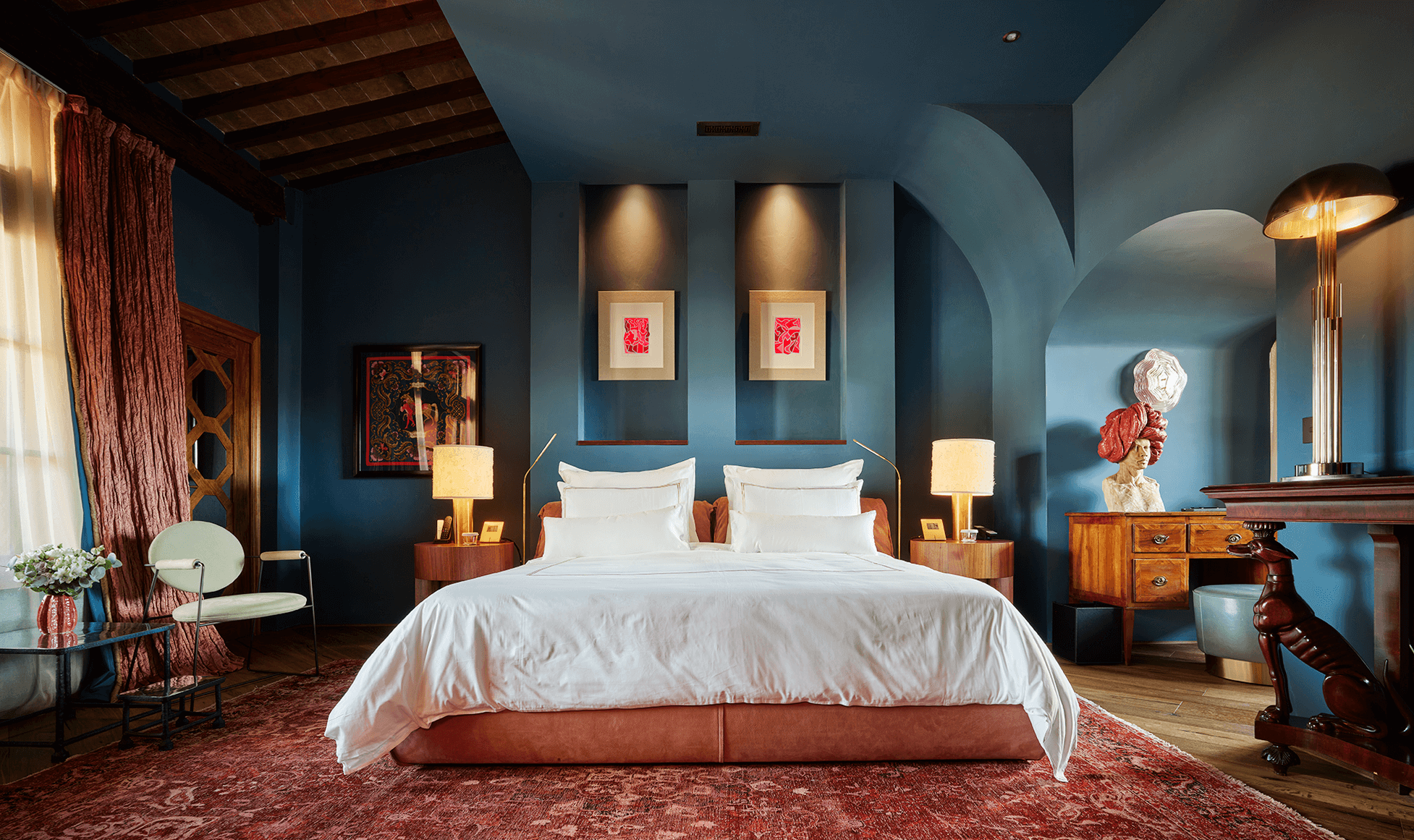
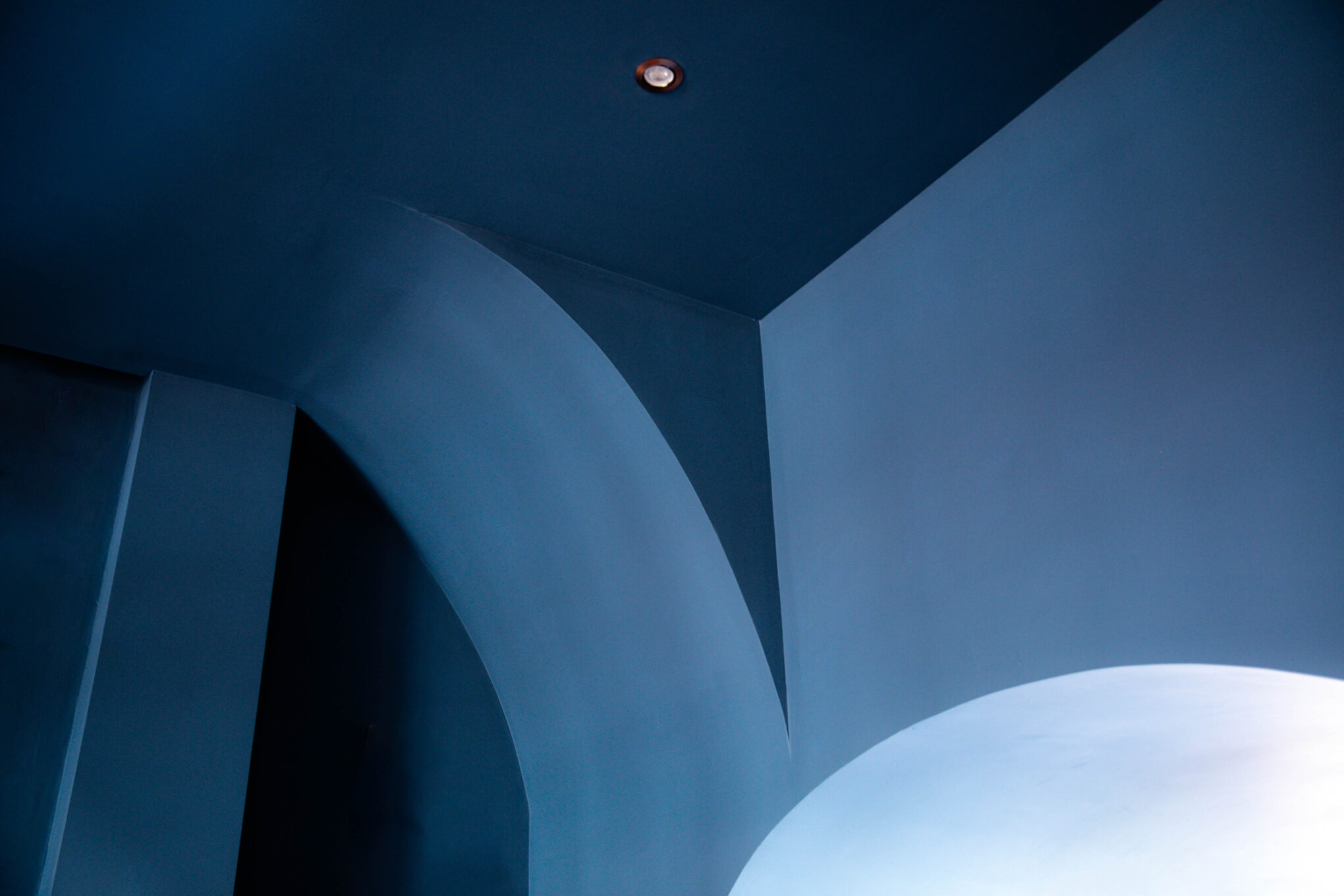
An environment enveloped entirely in blue — a deep, contemplative tone — where custom artworks stand out as vibrant accents. A raised niche welcomes the guest and offers a privileged view over Florence’s skyline: a vantage point suspended between sky and city. Yves Klein believed that blue was “the invisible made visible.”

In this room, the concept becomes space: blue expands rather than confines, inviting imagination instead of limiting it. Here, it functions as much as a mindset as it does a color.

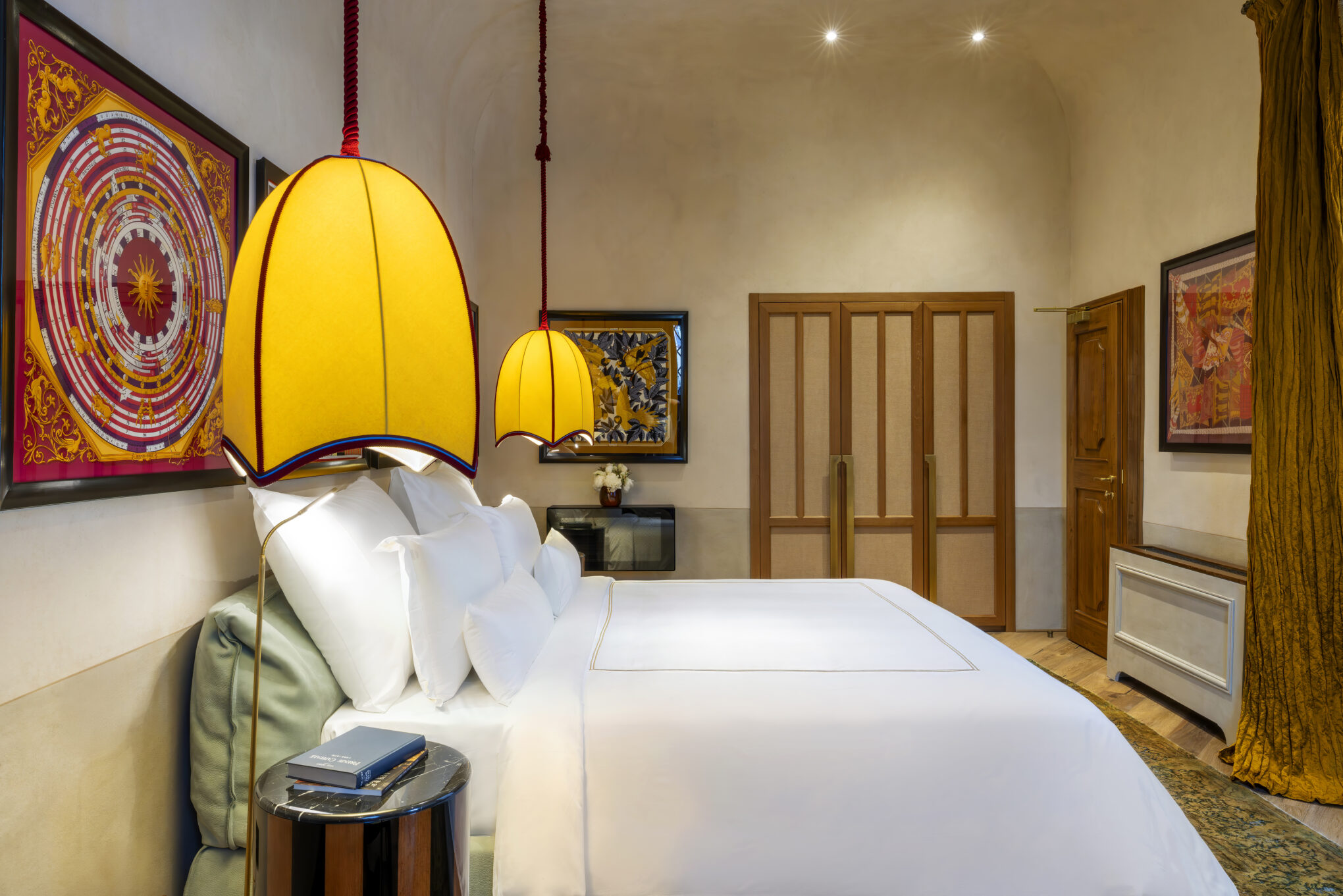
Example 2 — The Hermès Scarf Room

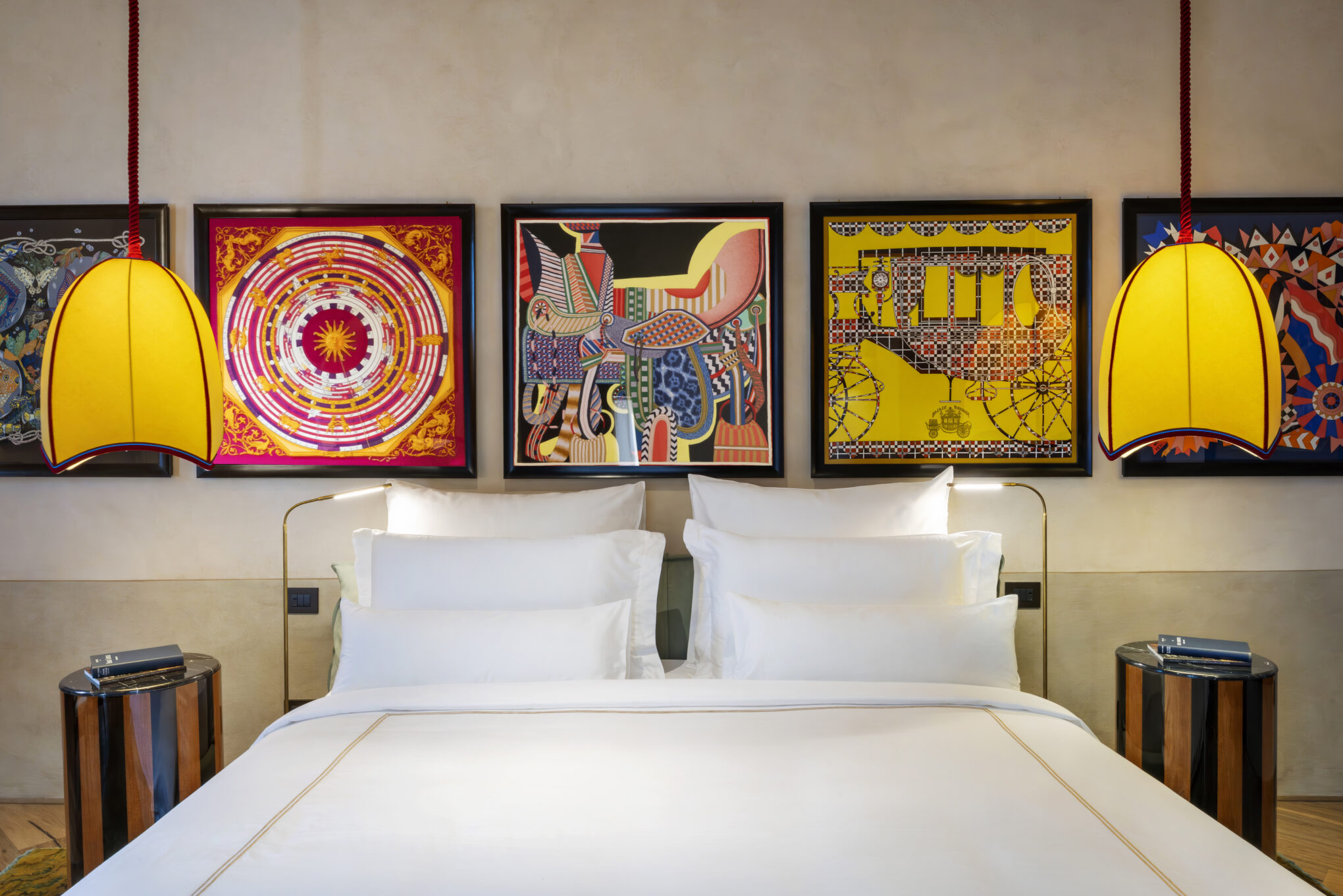
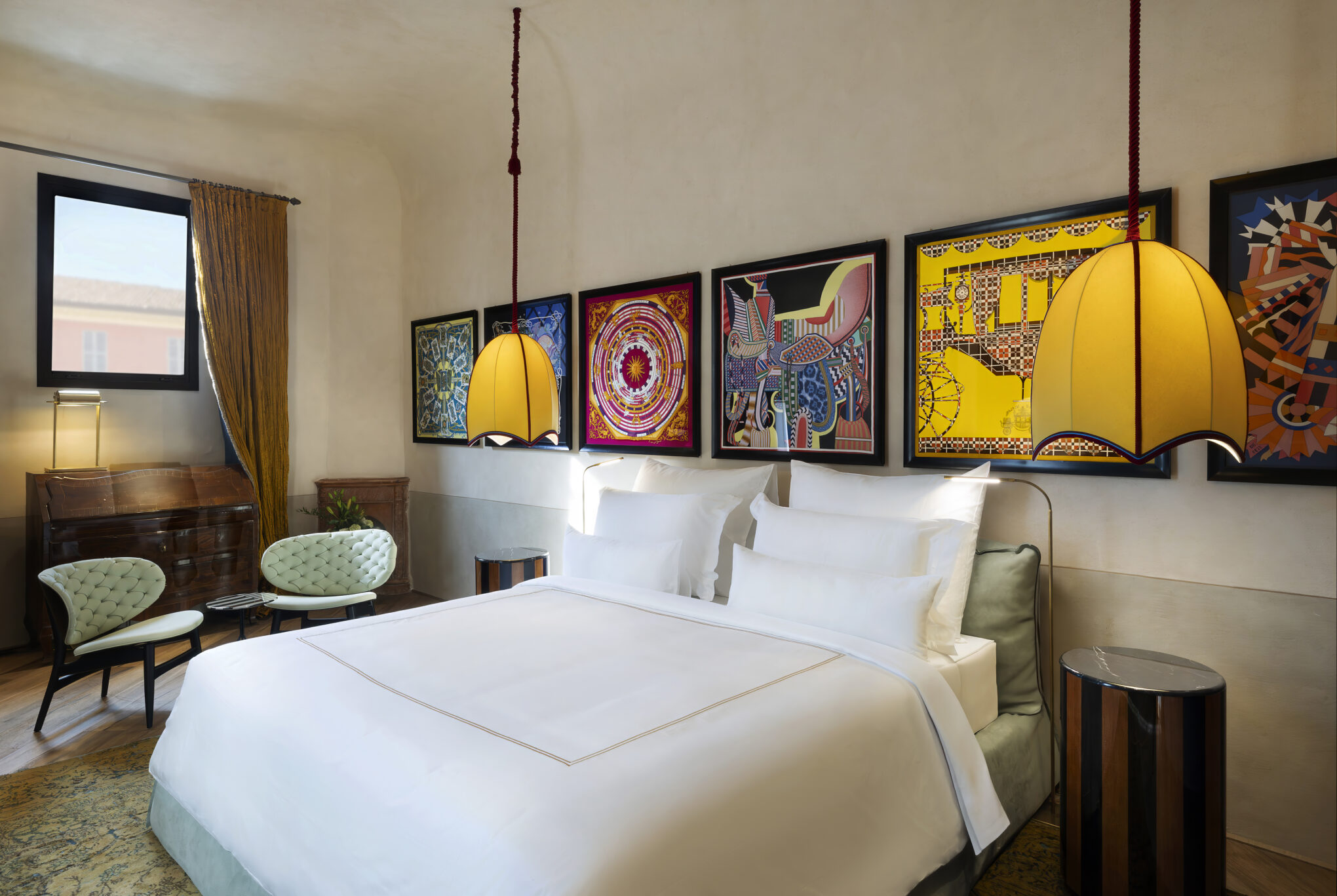
In another room, colour is not used to subtract but to multiply. The walls are entirely wrapped in Hermès scarves, composed as a mosaic of patterns and hues.

The result is complete visual immersion: a vibrant tapestry that transforms fabric into architecture and turns the room into a living, breathing narrative — an expression of experiential hospitality interior design.

Materials, Atmosphere, and Craftsmanship

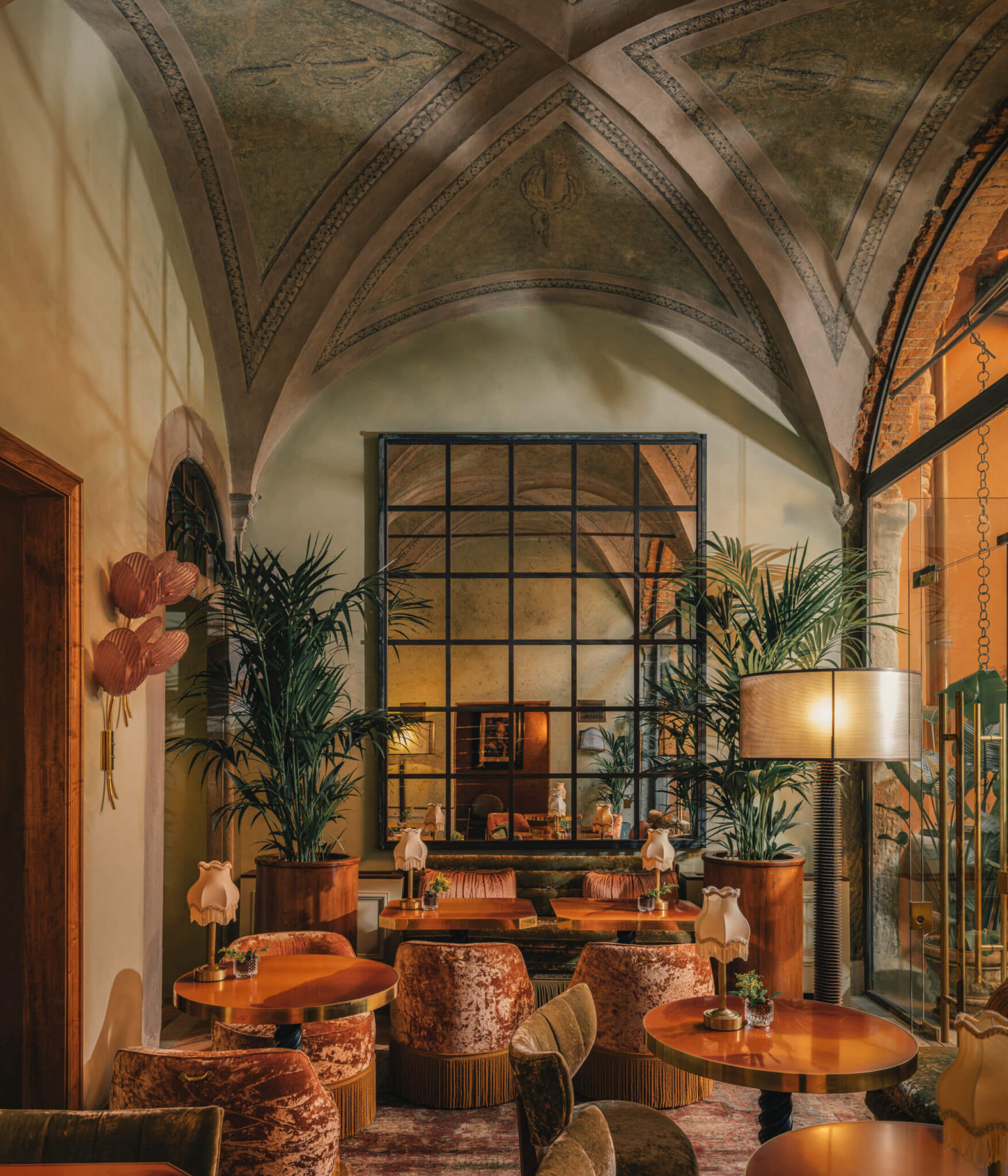
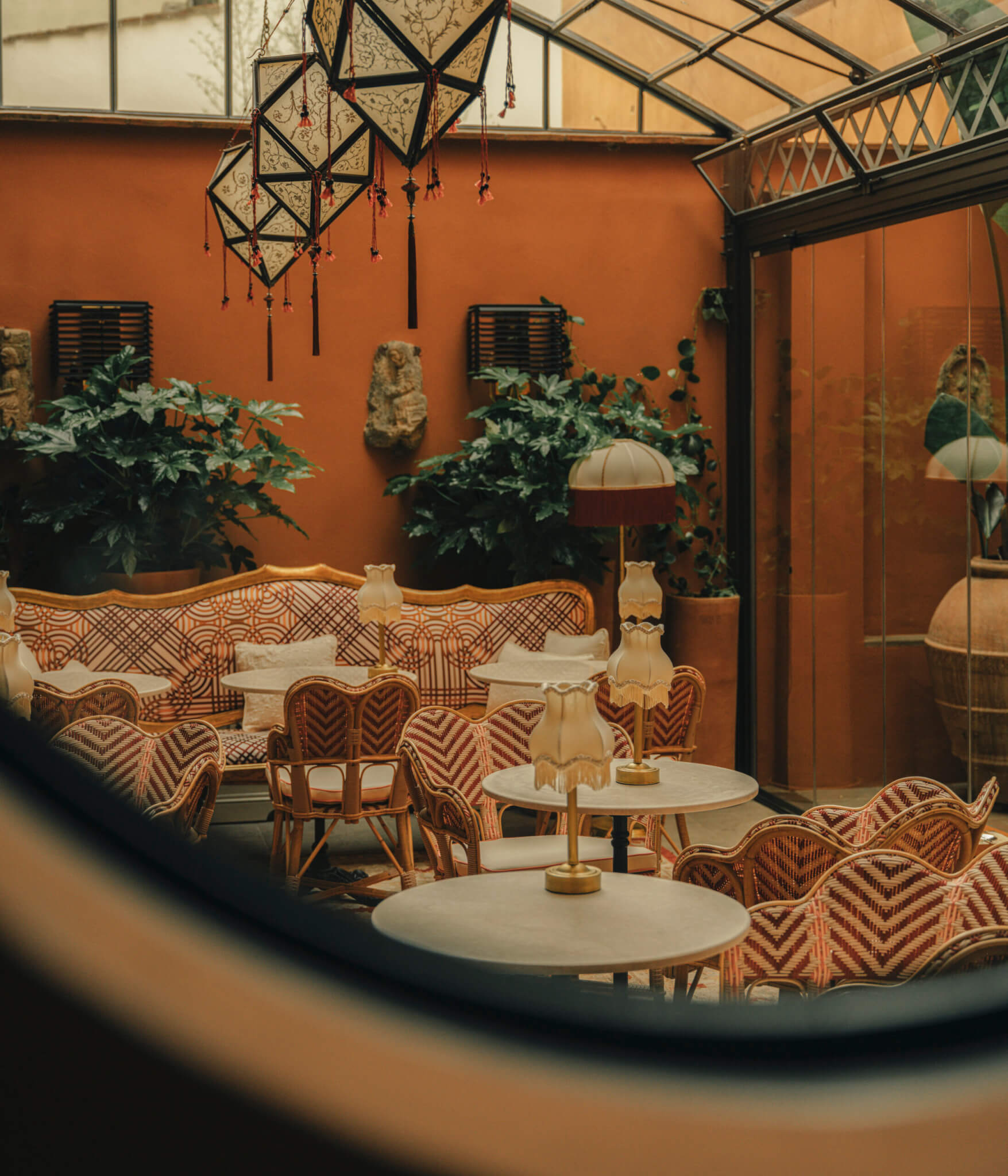
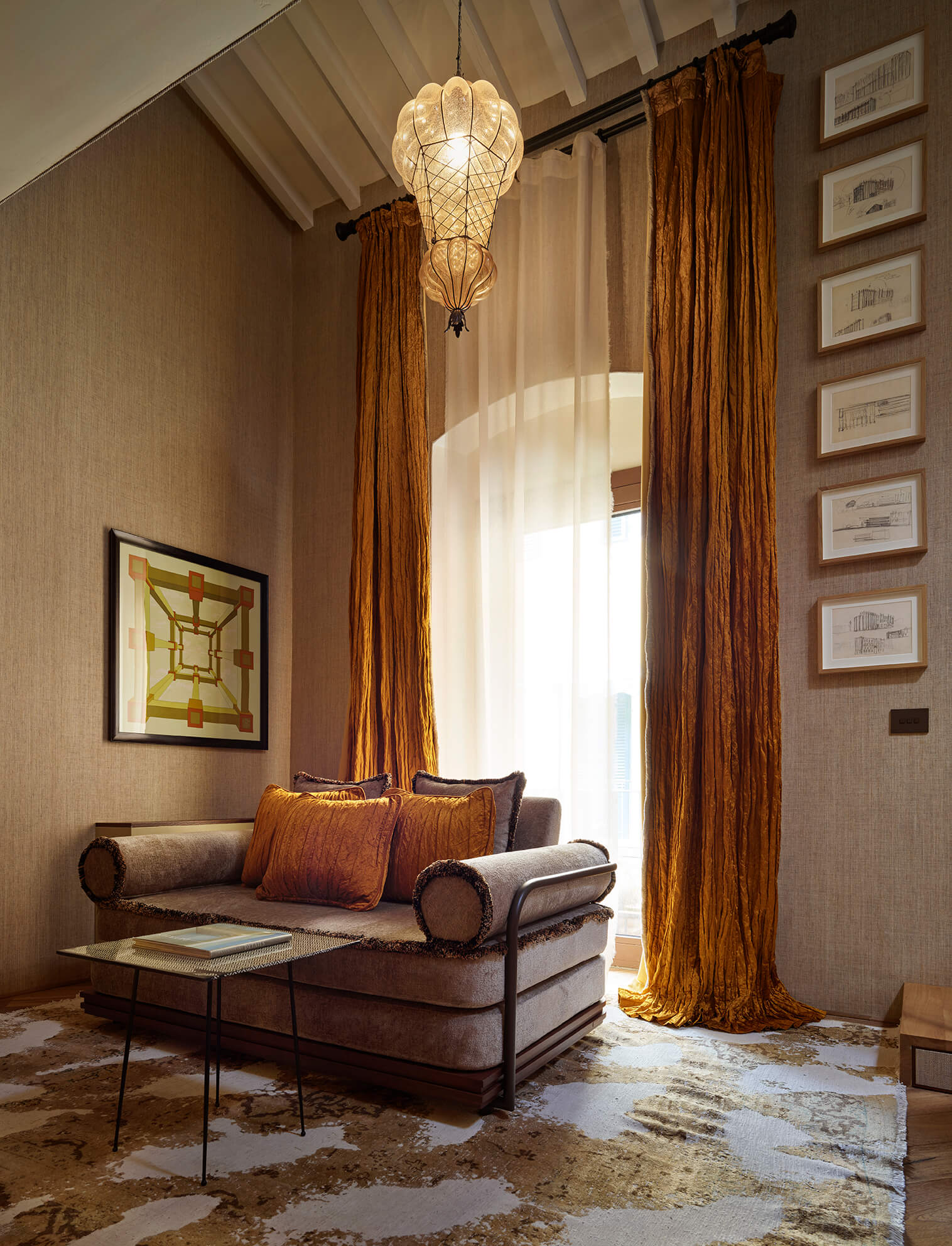
Throughout the hotel, materiality plays a central role. Natural plasters, velvet textiles, patinated brasswork, and Tuscan marble define the interiors, giving each room a tactile and atmospheric quality.

Soft colours and curated compositions reinforce the original character of the palazzo, while handmade details introduce intimacy and refinement. Instead of relying on decoration, the design privileges texture, proportion, and material depth — allowing spaces to feel composed rather than imposed.

Craftsmanship and Contemporary Design

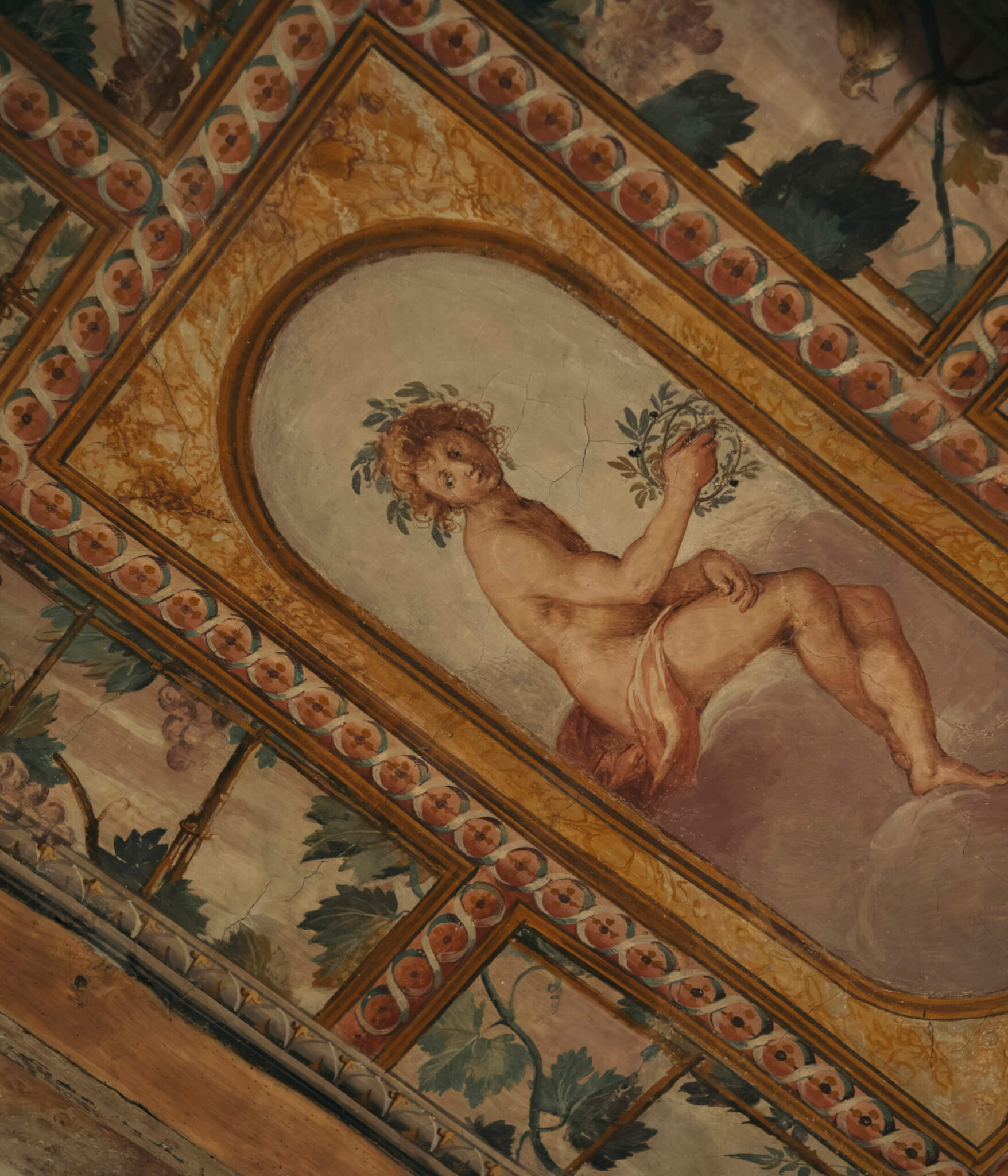
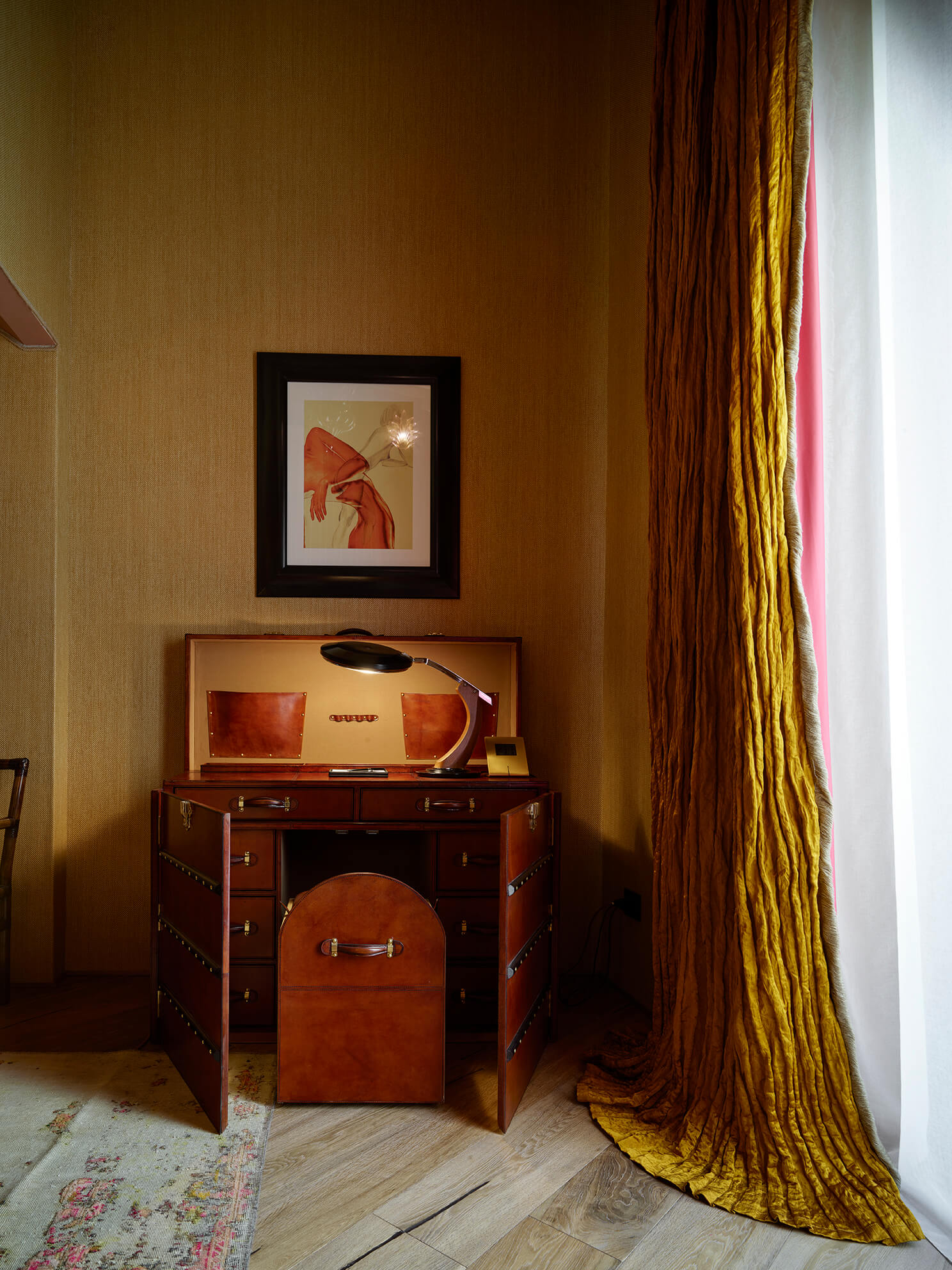
The design concept establishes a dialogue between past and present. Hand-restored frescoes coexist with commissioned artworks and bespoke furniture, creating interiors that feel layered yet coherent.

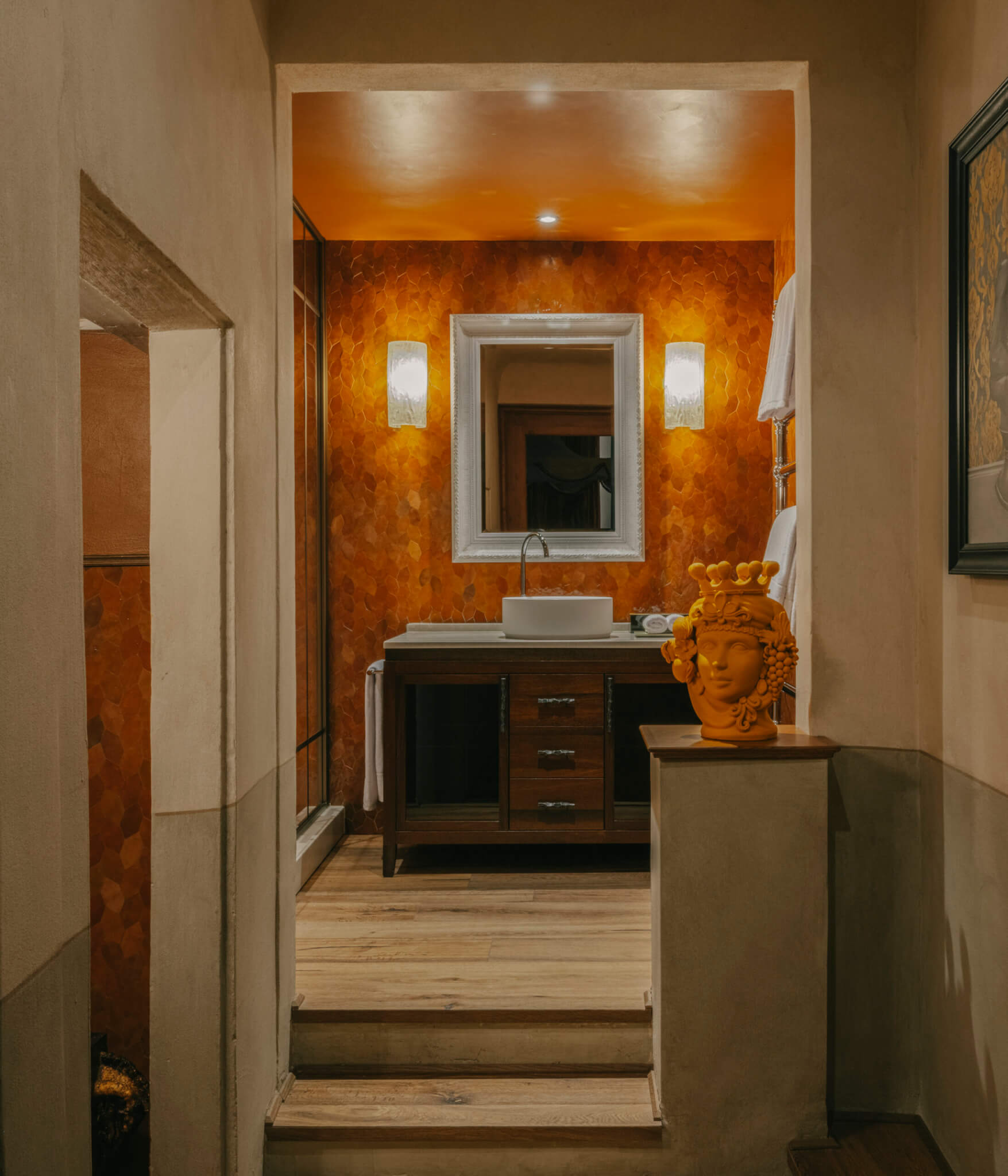
Living spaces transition naturally into serene bedrooms, while bathrooms feature artisanal ceramics, sculptural lighting, and brushed metal finishes.
Every surface reflects a deep respect for Florentine tradition and material culture. A subtle British influence also appears in the architect’s creative language — an understated sensibility that introduces restraint and sophistication while complementing the Italian setting.

Public Spaces and the Hospitality Experience

The public areas continue the same narrative. The James Restaurant interprets Mediterranean cuisine through minimalist interiors and a refined use of colour, where design and gastronomy work together to shape the guest experience.

Similarly, the 1564 Lounge Bar — named after the year the palazzo was built — offers a cinematic atmosphere. Velvet textures, candlelight, and curated soundscapes enhance moments of social interaction, while rare spirits and botanicals enrich the setting.

The Building as a Riverbed: A Container That Breathes Stories

The building’s geometry became a riverbed: a form that welcomes the stories of the rooms just as a river welcomes flowing water while remaining itself.
The interior does not replicate the building’s history — it amplifies it and allows it to breathe.

The result is a rare equilibrium: a hotel that is neither ancient nor contemporary, but temporal — crossed by time without being constrained by it.

Inheritance as a Form of Design

Every design decision serves a clear purpose.

The project preserves the soul of the historic building while opening a new chapter in Florentine hospitality. The James Suite Hotel Firenze 1564 stands as a contemporary expression of luxury hotel interior design in Florence — a place where craftsmanship, heritage, and refined hospitality converge.
Heidegger wrote that building means “safeguarding being over time.”

This project embraces that idea: it preserves, transmits, and anticipates.

It is not a hotel designed for today, but for tomorrow.
It does not seek immediacy, but continuity.
It does not showcase: it narrates.
It does not impose: it endures.
It is a place that does not follow time — it moves through it naturally.